Bringing Order to the Chaos of Regulatory Compliance
Type
Product Design
Year
2022
Services
UX-research, Usability testing, Prototyping, Cross-functional collaboration, Iterative design,
Design file
Context
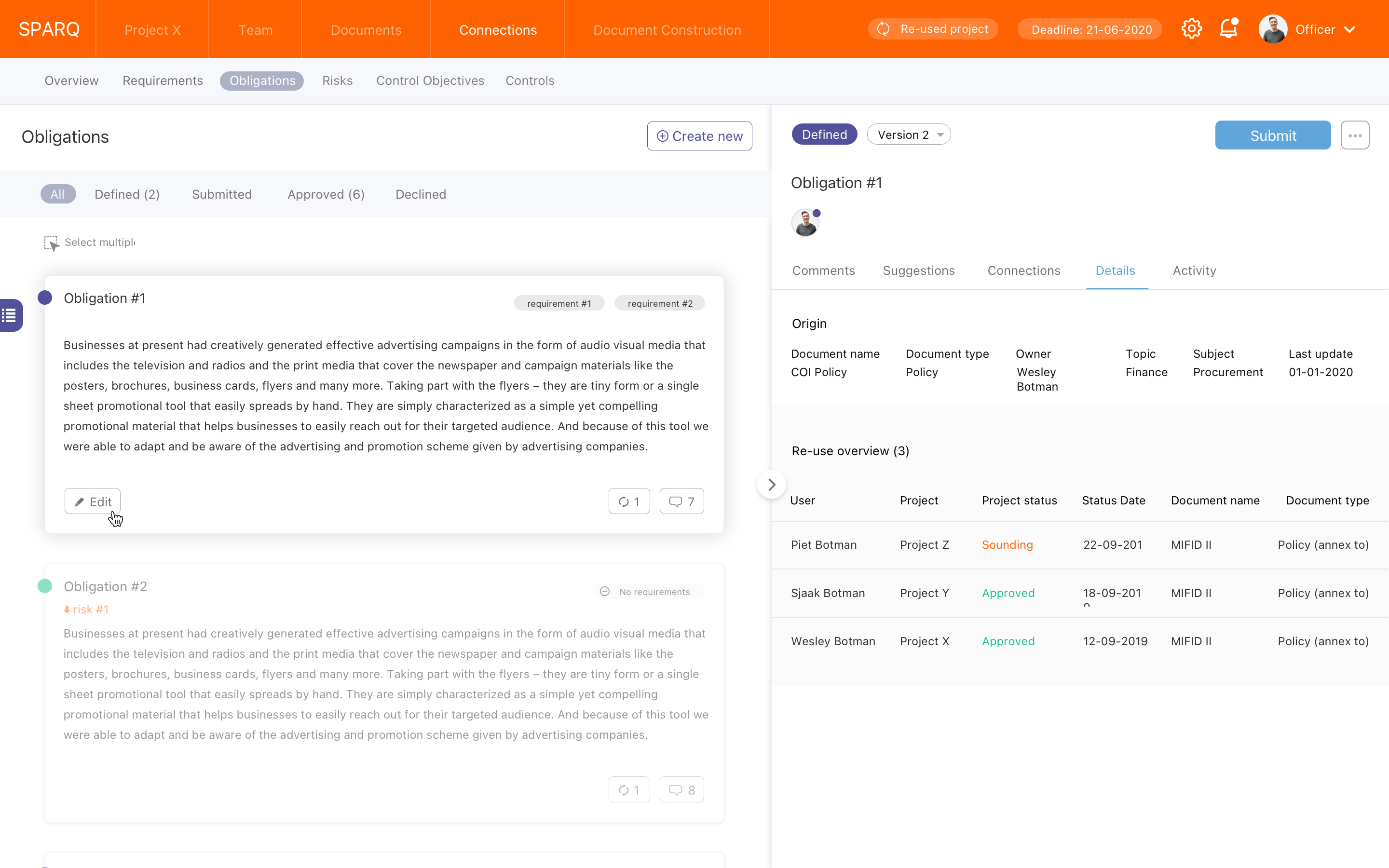
ING is one of the largest banks in the Netherlands. Like every major financial institution, it runs on regulation. Every new law, every policy change, every supervisory request triggers a wave of compliance work across multiple teams. Sparq was a startup spun out of ING's internal accelerator with one goal: build a platform that brings structure to regulatory change management.
I joined this project at Eli5, the product studio collaborating with ING to design and build Sparq from the ground up.
The Problem
Compliance work at ING was a patchwork. Different teams handled different parts of regulatory change in their own way. Documents were sent over email. Approvals lived in inboxes and shared drives. Each team had its own definition of what "done" looked like, and there was no single place to see how a regulatory change moved through the bank.
The result was slow, fragile and impossible to audit cleanly. A bank that needs to respond quickly to regulatory shifts can't afford that kind of fragmentation.
My Role
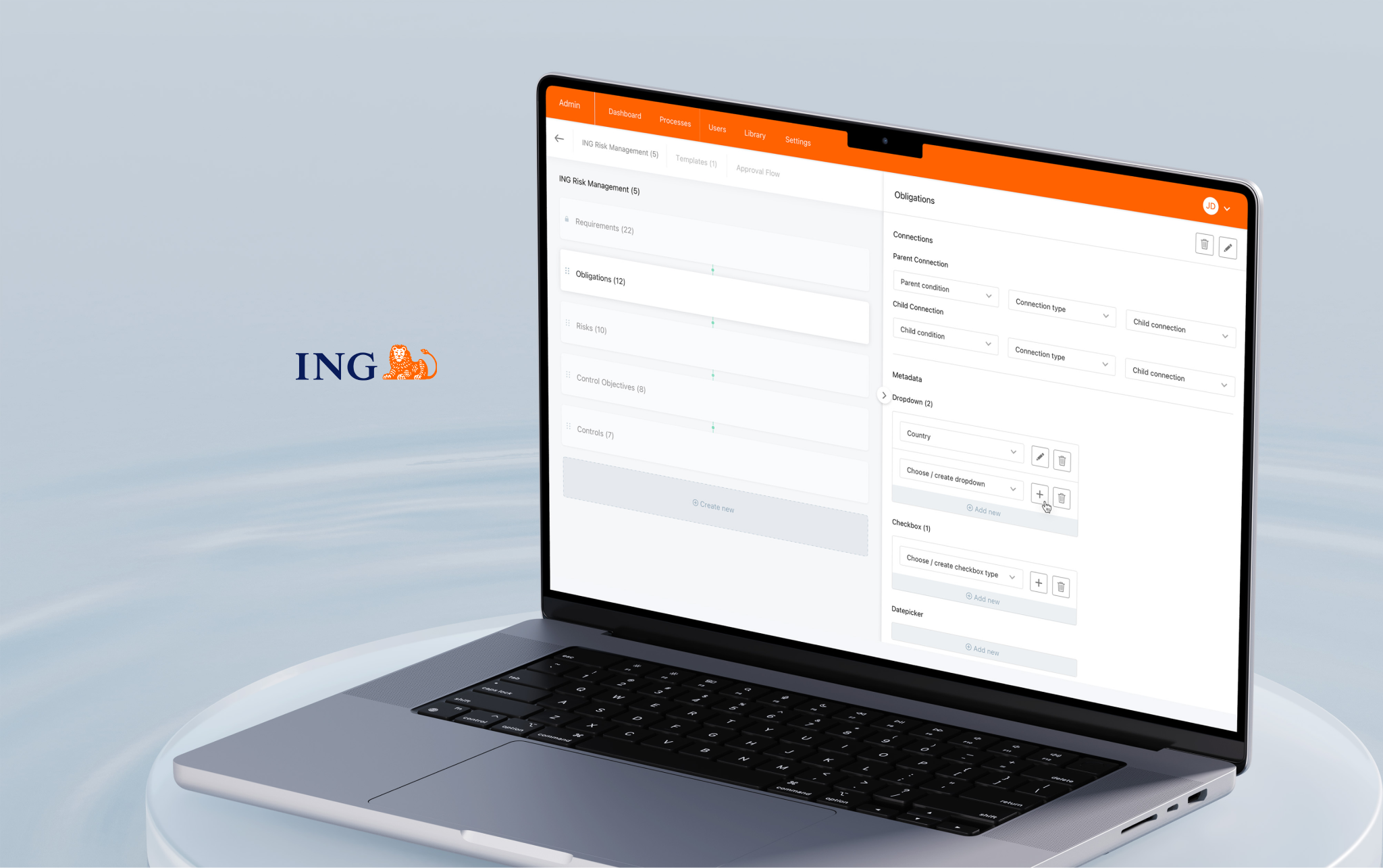
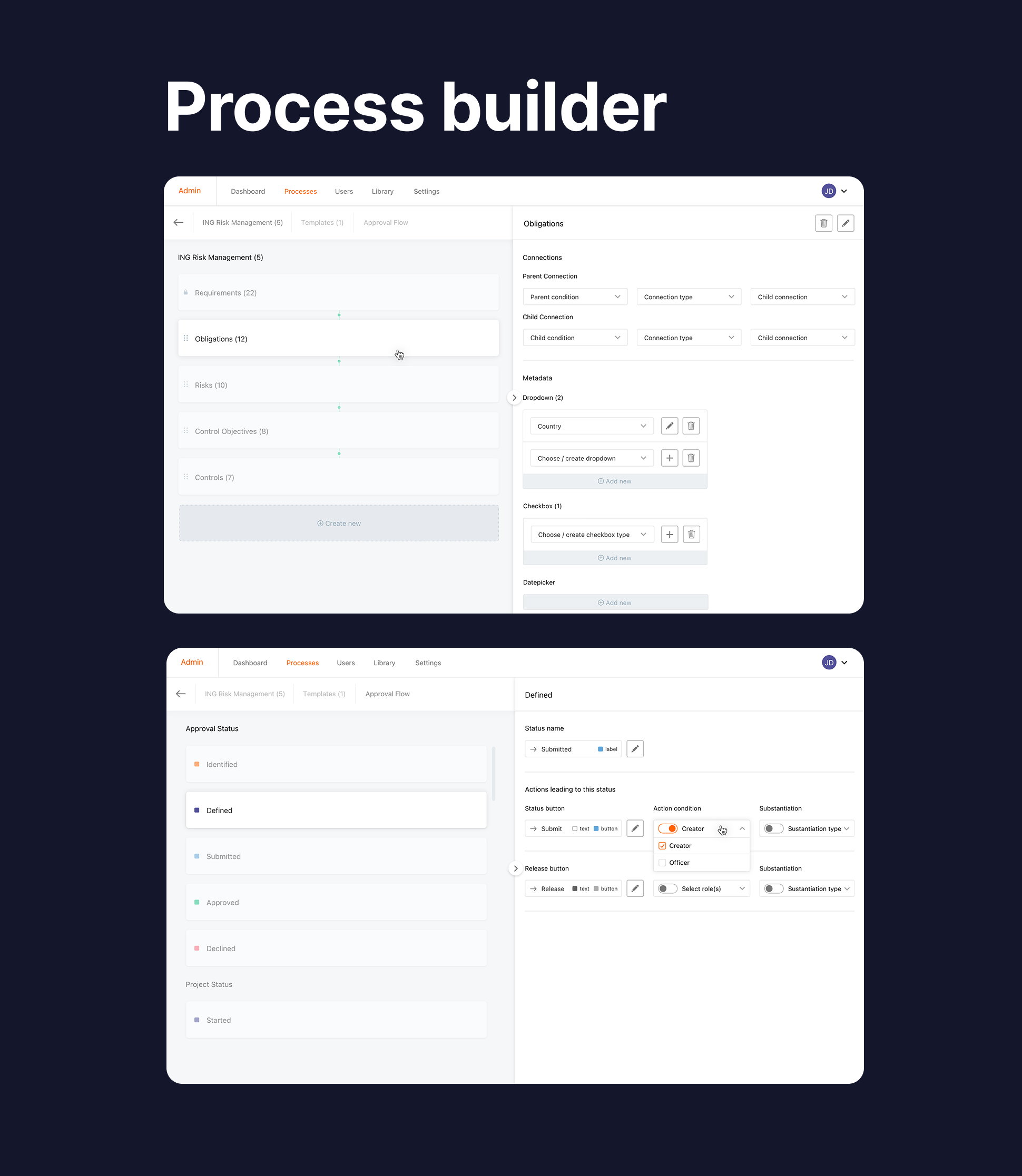
I worked on Sparq during its MVP stage, which the team shipped and validated in just 10 weeks. My focus was on two core parts of the platform. The first was the admin environment where compliance teams configured how a regulatory process worked end-to-end. The second was a drag-and-drop process builder that let admins define their own approval flows, statuses, conditions and metadata without needing engineering help every time something changed.
A regulatory process at ING isn't one-size-fits-all. Risk management runs differently from GDPR data requests, which runs differently from transaction reporting. The platform needed to be flexible enough to model all of them, without becoming so complex that compliance officers couldn't actually use it.
Research access was a constraint from the start. As a partner studio working with a bank, we didn't have direct access to end users across ING's compliance teams. Instead, we worked closely with a senior stakeholder from ING who acted as the domain expert and proxy for the broader compliance organisation. He brought the requirements, the regulatory context, and the institutional knowledge of how compliance actually worked across the bank.
We compensated for the indirect research by being aggressive with validation.
What I Designed
A configurable process builder where admins could define every part of a regulatory workflow visually. Statuses, approval steps, conditions for who could act on what, metadata fields like dropdowns, checkboxes and date pickers, and the connections between parent and child objects in the process.
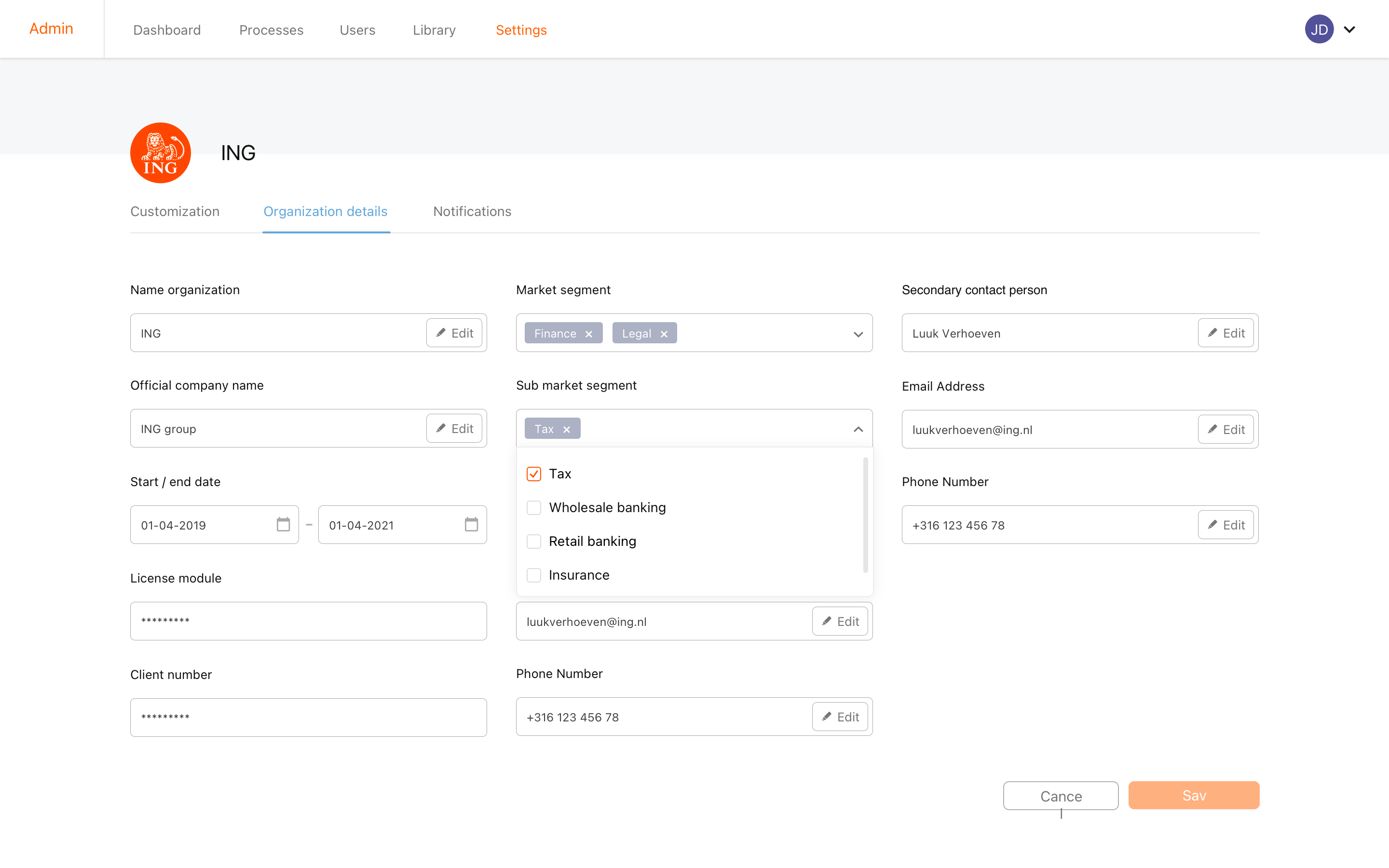
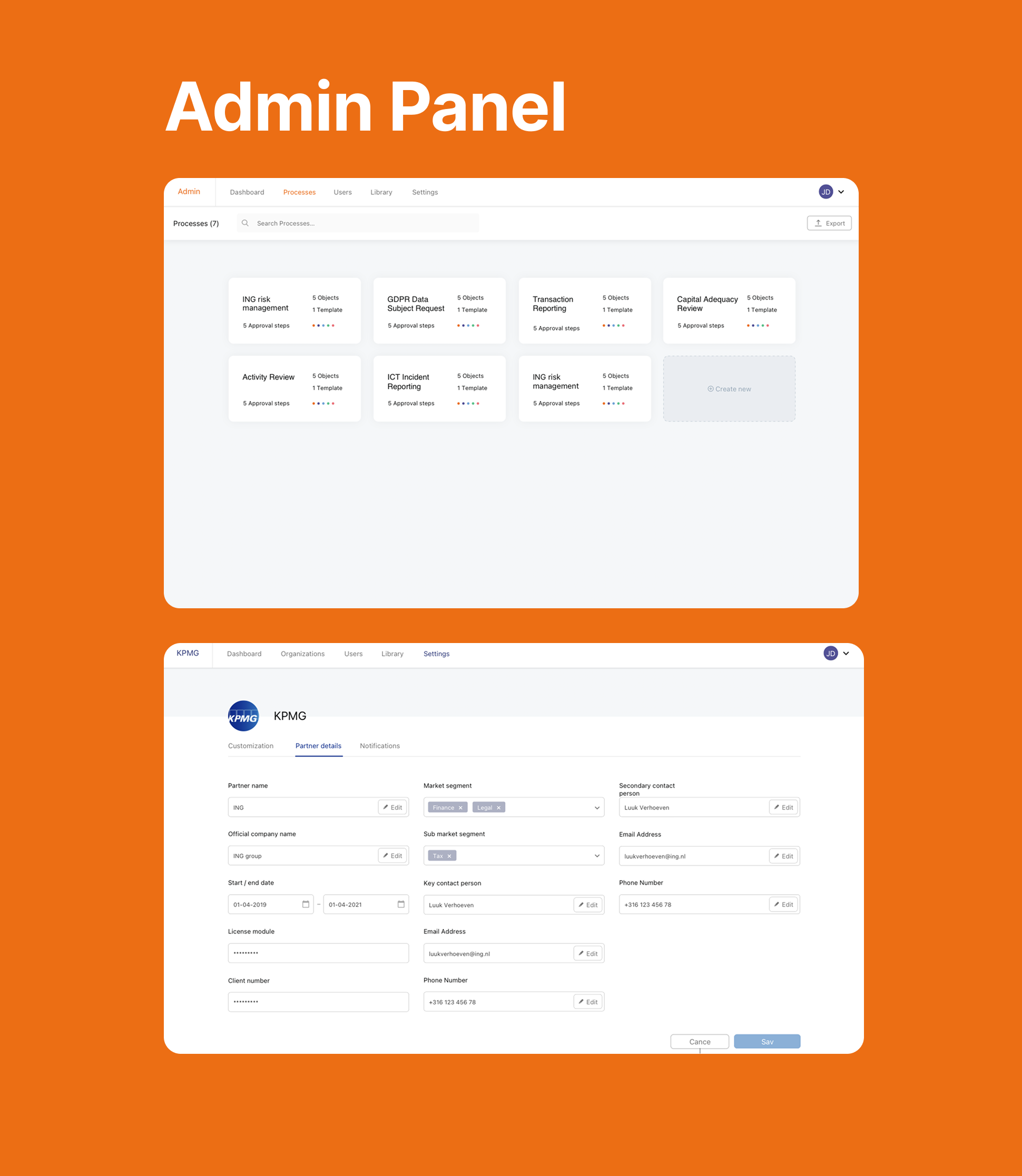
Alongside that, the admin environment for managing the library of regulatory documents, users and roles across the bank. Filterable views for everything from country and department down to the status of individual documents in active projects. Built for compliance officers who needed to find the right thing fast and trust that the system reflected reality.
A few of the more complex pieces I contributed to included a no-code document builder that allowed users to construct dynamic documents from backend data elements, and a custom text editor with selection-based controls for tagging and linking regulatory content.
The Impact
Sparq replaced a fragmented, manual way of working with a single platform that compliance officers could configure themselves. Regulatory processes that used to live in email threads and spreadsheets became structured, visible and auditable. The platform was rolled out across ING's global offices and later acquired by Corlytics for €5M.
Results
Sparq replaced a fragmented, manual way of working with a single platform that compliance officers could configure themselves. Regulatory processes that used to live in email threads and spreadsheets became structured, visible and auditable. The platform was later acquired by Corlytics for €5M.