Turning Dead Stock Into Recovered Value
Type
Feature
Year
2025
Services
UX-research, Usability testing, Prototyping, Cross-functional collaboration
Design file
The Problem
As companies scaled their workforce through Workwize, a quiet problem was building up in offices and warehouses: piles of laptops and equipment that nobody was using anymore. Offboarding an employee meant the device went somewhere. There was no structured way to decide what to do with it, no process to resell it, and no way to track what was even out there.
Before this feature existed, clients would email our operations team and ask them to sort it out. The ops team would take it from there manually — coordinating with third parties, chasing confirmations, updating clients over email. It worked, but it didn't scale. And for clients sitting on hundreds of idle devices, it was a real cost: deprecating hardware losing value every month, and no visibility into what was happening with it.
The approach
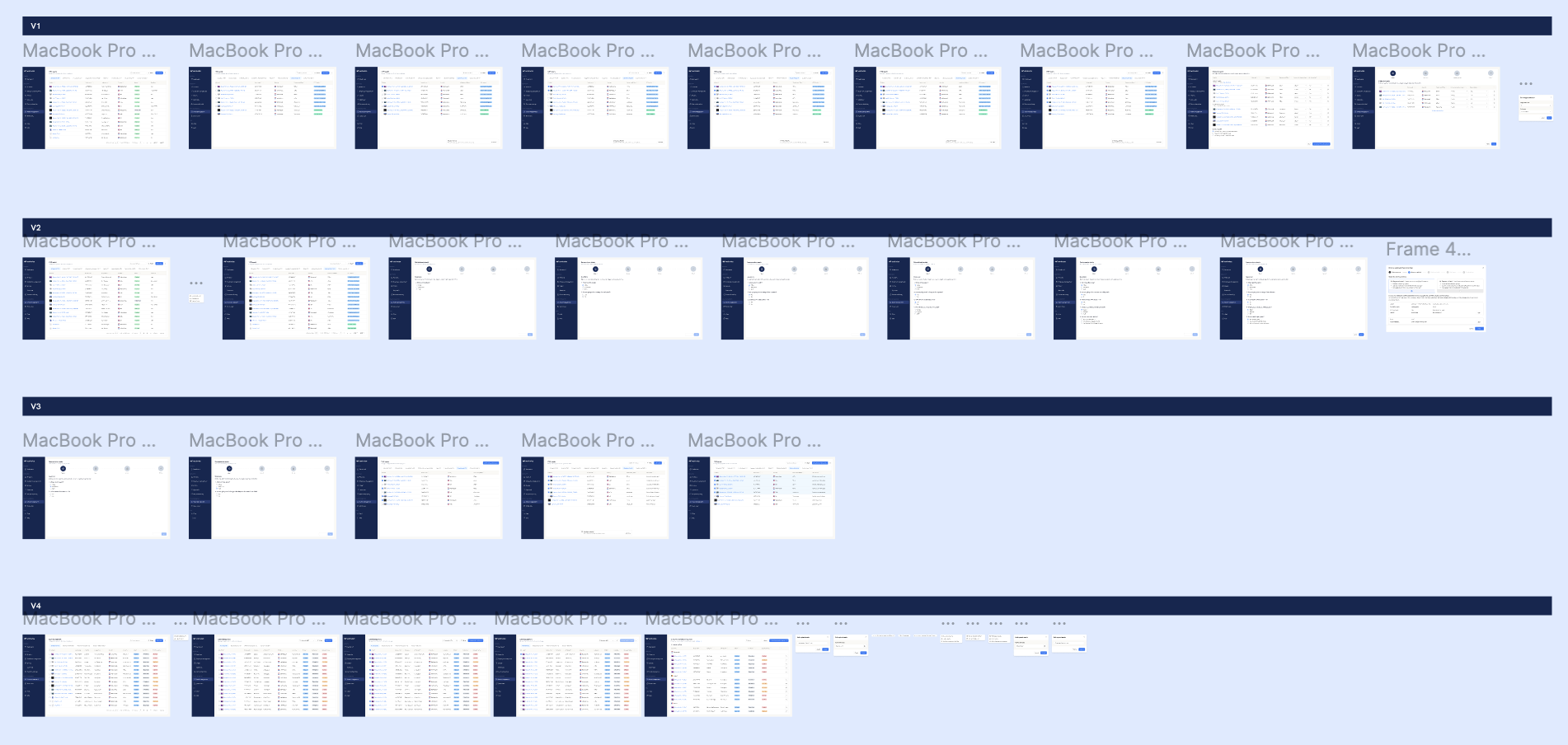
The prototype went through close to ten rounds of validation with clients before we shipped. Each round surfaced usability issues that wouldn't have been obvious on paper — friction around how regional options were presented, confusion when the same client had devices across different countries, unclear status states once a request was in progress. None of it was about big trade-offs. All of it was about getting the details right.
That iterative loop is what made the final flow feel obvious to use, even though the logic underneath (regional availability, partner routing, status tracking) was anything but simple.
My Role
I worked on this collaboratively with another designer since this was part of a big back-end restructure, taking ownership of the client-facing decommission flow. My focus was making sure clients could initiate, manage and track the full process from within the Workwize platform, without needing to contact anyone.
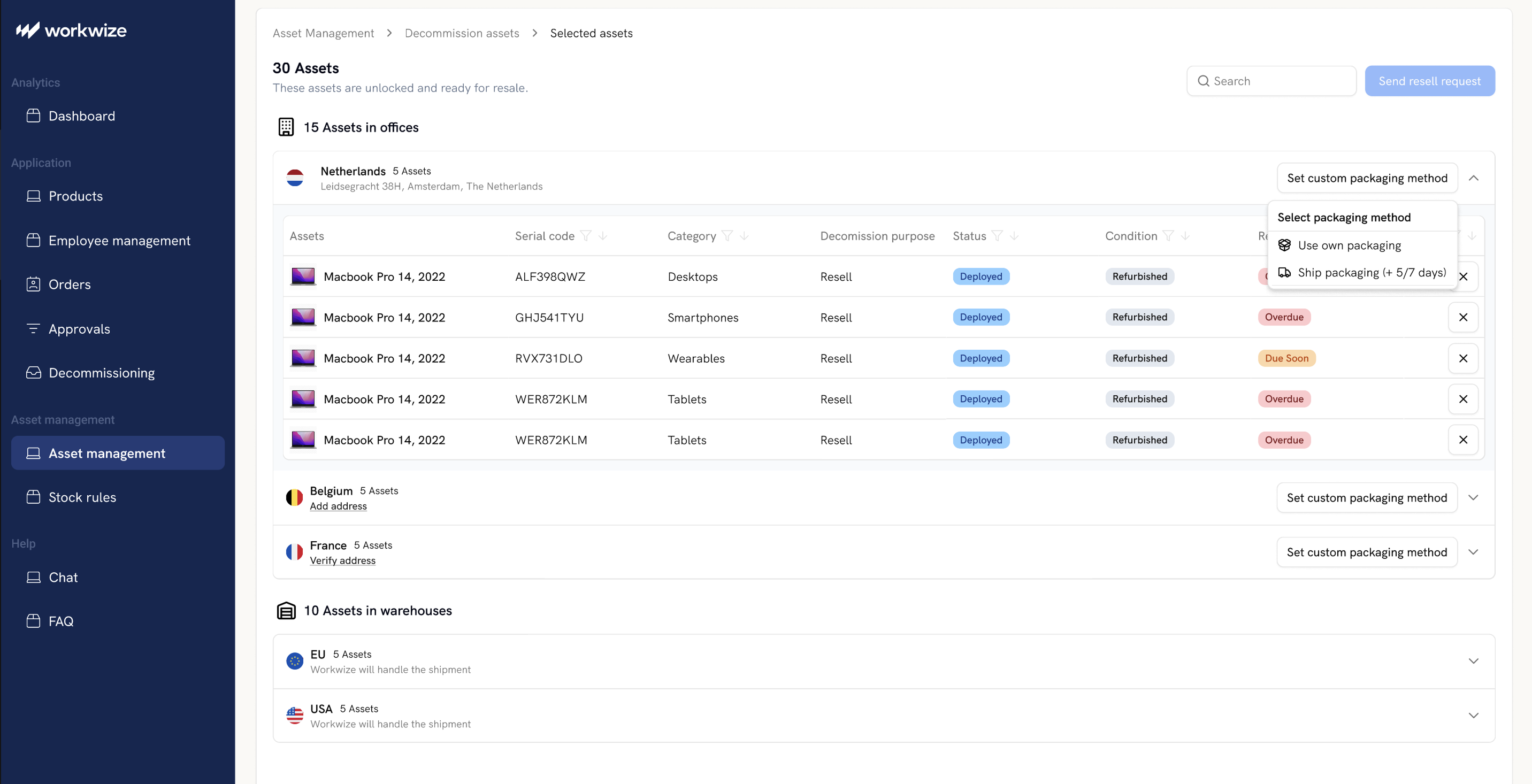
The key constraint was regional. Our third-party resale and disposal partners don't operate everywhere, so the feature had to account for which decommission options were available per region. A client with devices in three different countries might have different options for each. That meant the flow had to be smart enough to surface the right choices in the right context, without confusing the person on the other side.
What Is Designed
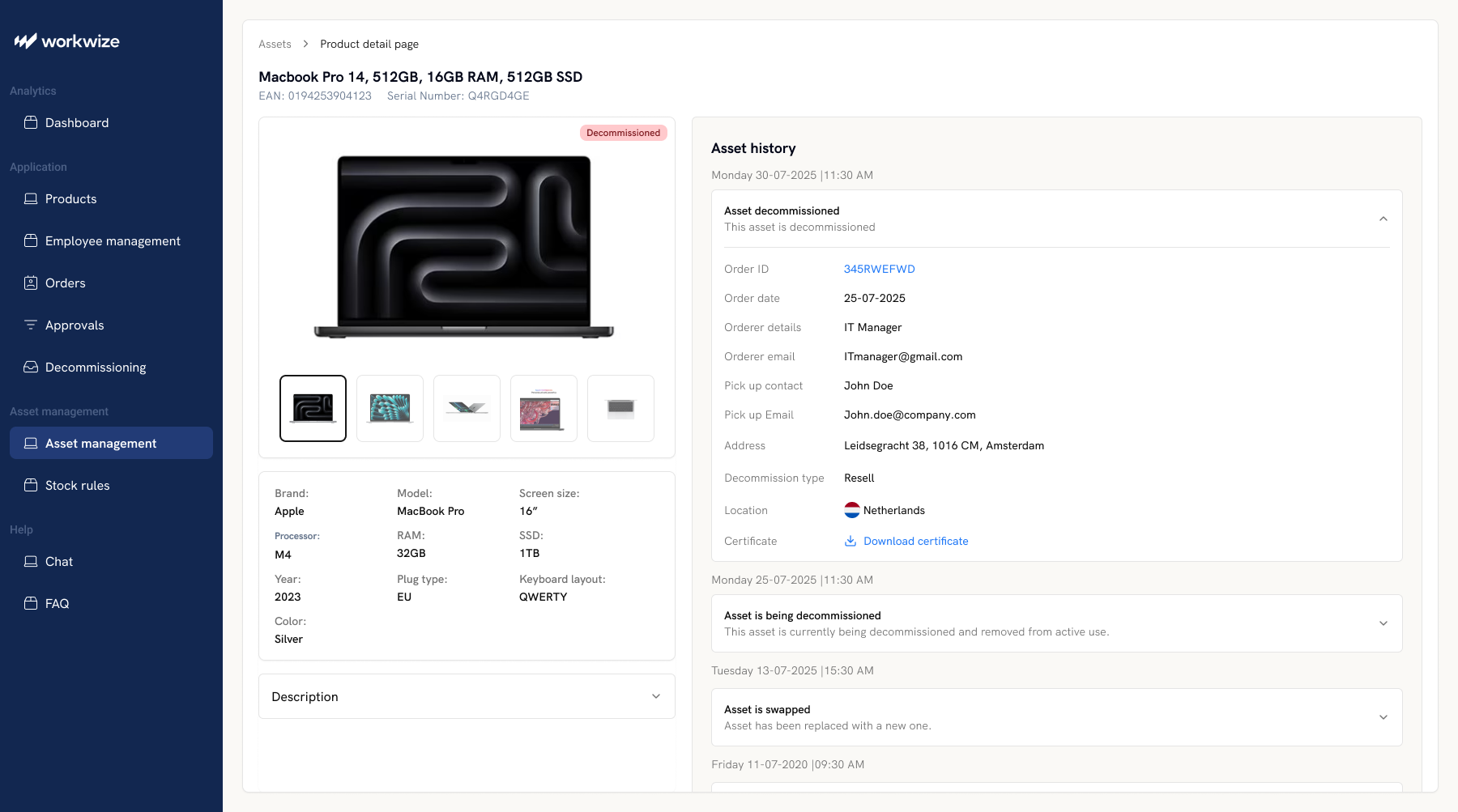
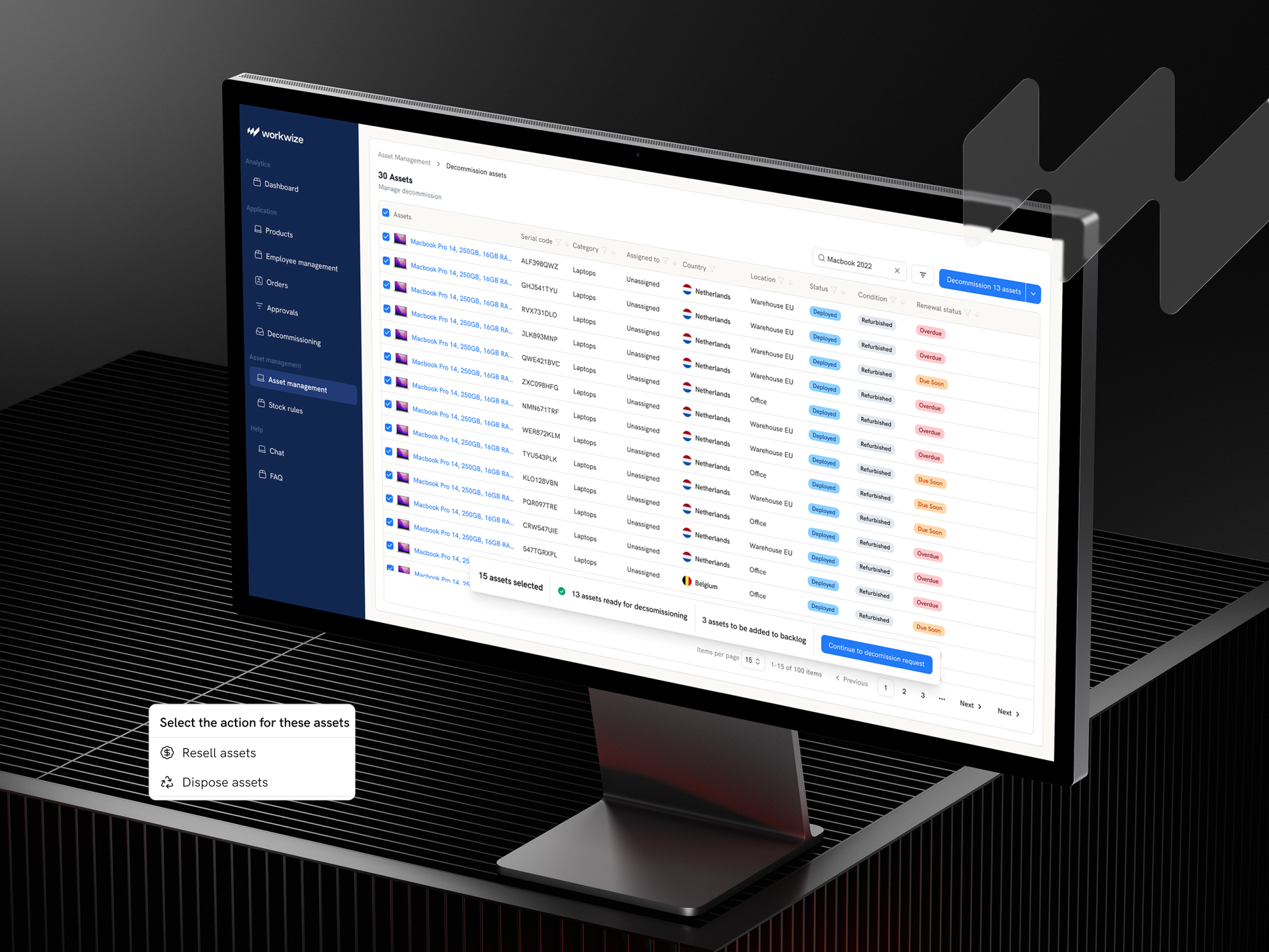
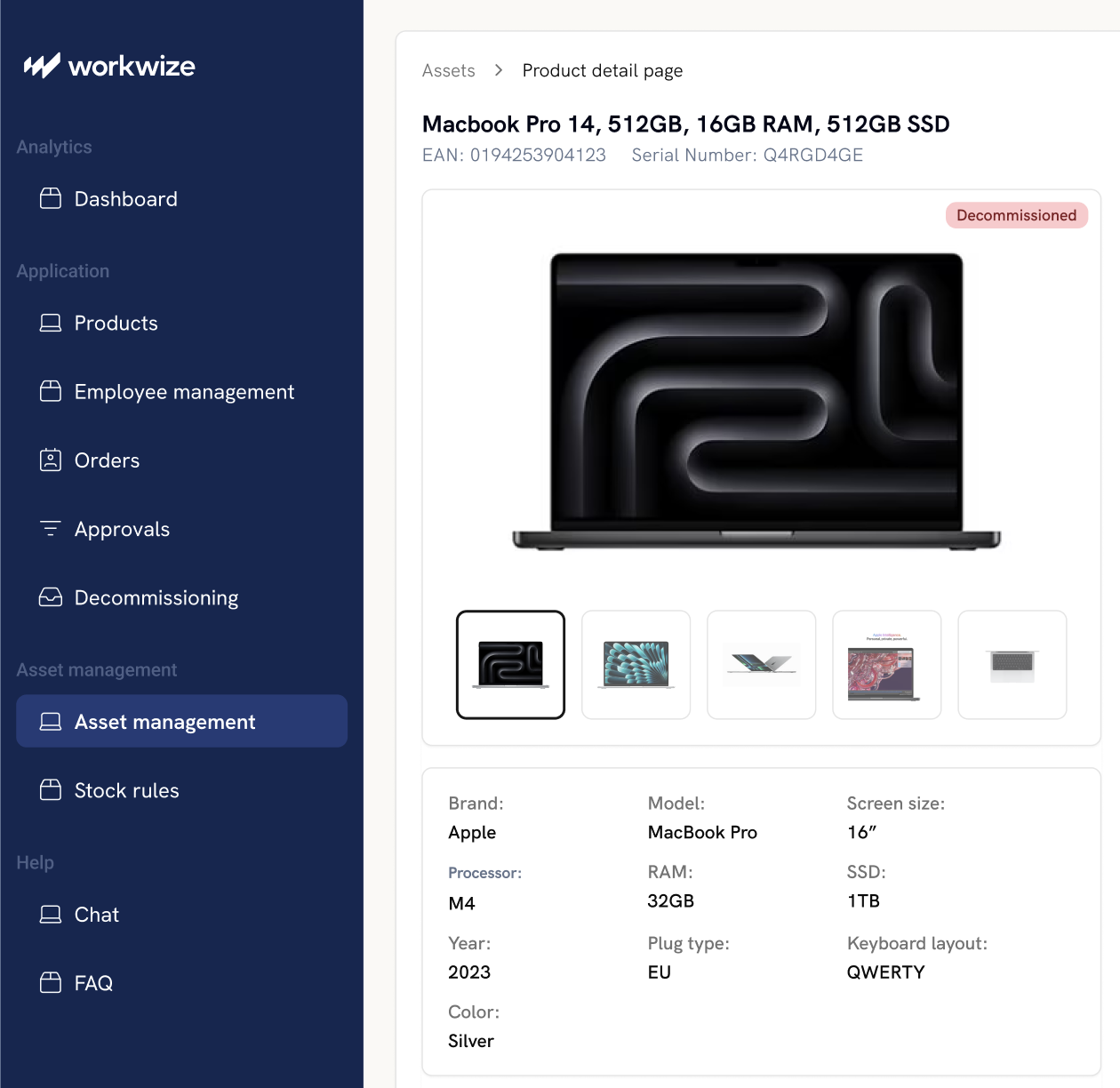
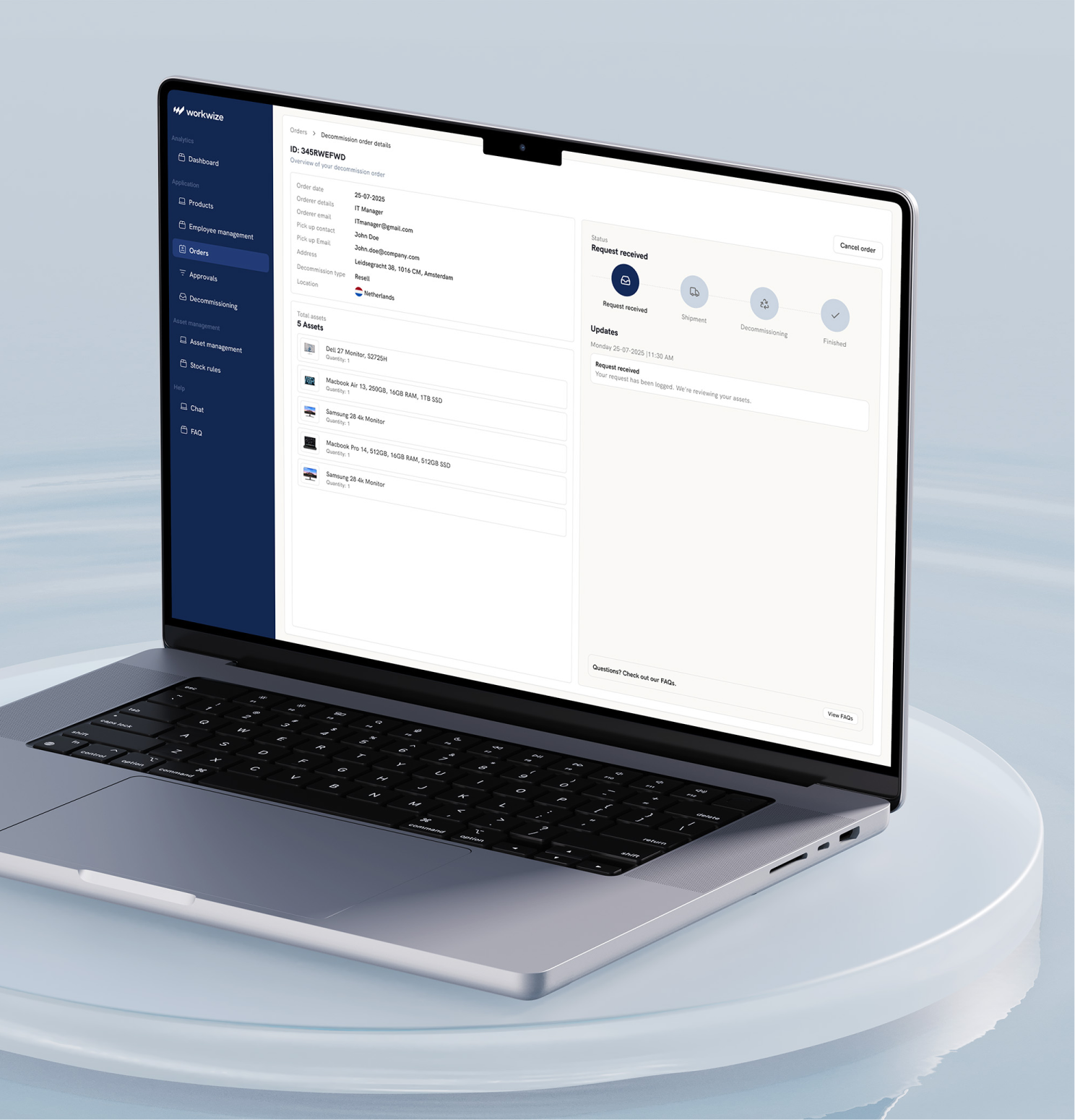
- A decommission flow that lets clients select devices, choose between resale or disposal depending on regional availability, and submit a structured request that automatically sends all the right information to the relevant third party. No emails, no manual coordination. Once a request was submitted, clients could track its progress directly in the platform: from pickup through to resale confirmation or disposal certificate. What used to live entirely in someone's inbox now had a clear, auditable trail.
The Impact
The operations team went from manually coordinating every single decommission request to overseeing a largely automated process. Estimated time saved per request: several hours of back-and-forth reduced to minutes. For clients reselling hardware, the feature turned idle equipment into recovered value — on average a refurbished business laptop resells for €150 to €400 depending on age and condition, meaning a client offboarding 50 devices could recover anywhere from €7,500 to €20,000 that would otherwise have sat in a warehouse depreciating.
Results
The decommissioning feature gave clients something they never had before: a way to close the loop on hardware they were done with. What used to be an informal email to the operations team, followed by weeks of back-and-forth and no visibility, became a self-service flow with real-time tracking. Idle devices stopped piling up in offices and warehouses. Clients could finally act on their unused equipment without involving anyone, and in many cases turn it into recovered value through resale.