Cutting Weeks of IT Chaos Down to a Managed Flow
Type
Feature
Year
2025
Services
End-to-end design, UX-research, Usability testing, Prototyping, Cross-functional collaboration
Design file
The Problem
When a new company onboarded onto Workwize, nobody really owned the process of getting laptops properly configured. IT managers were juggling it all manually. Installing MDM software themselves, keeping track of which apps landed on which device, following up over email to confirm anything had actually happened. It was messy, slow, and completely dependent on people remembering to do things.
What made it worse was what was at stake. Workwize's whole value proposition is zero-touch IT. A laptop gets ordered, it shows up at an employee's door already set up and ready to go. That only works if you can trust the provisioning side. Without that, you're shipping devices into the unknown. Wrong software, missing policies, no configuration at all. This feature had a huge impact on reducing onboarding time and was a key flow since other features like automatic-onboarding where depending on this.
My Role
I owned this one from research to shipped product. Before I drew a single screen, I spent time understanding what was actually going on. I talked to IT managers, mapped out how the internal ops team was picking up the slack, and traced where things were falling apart between all the parties involved.
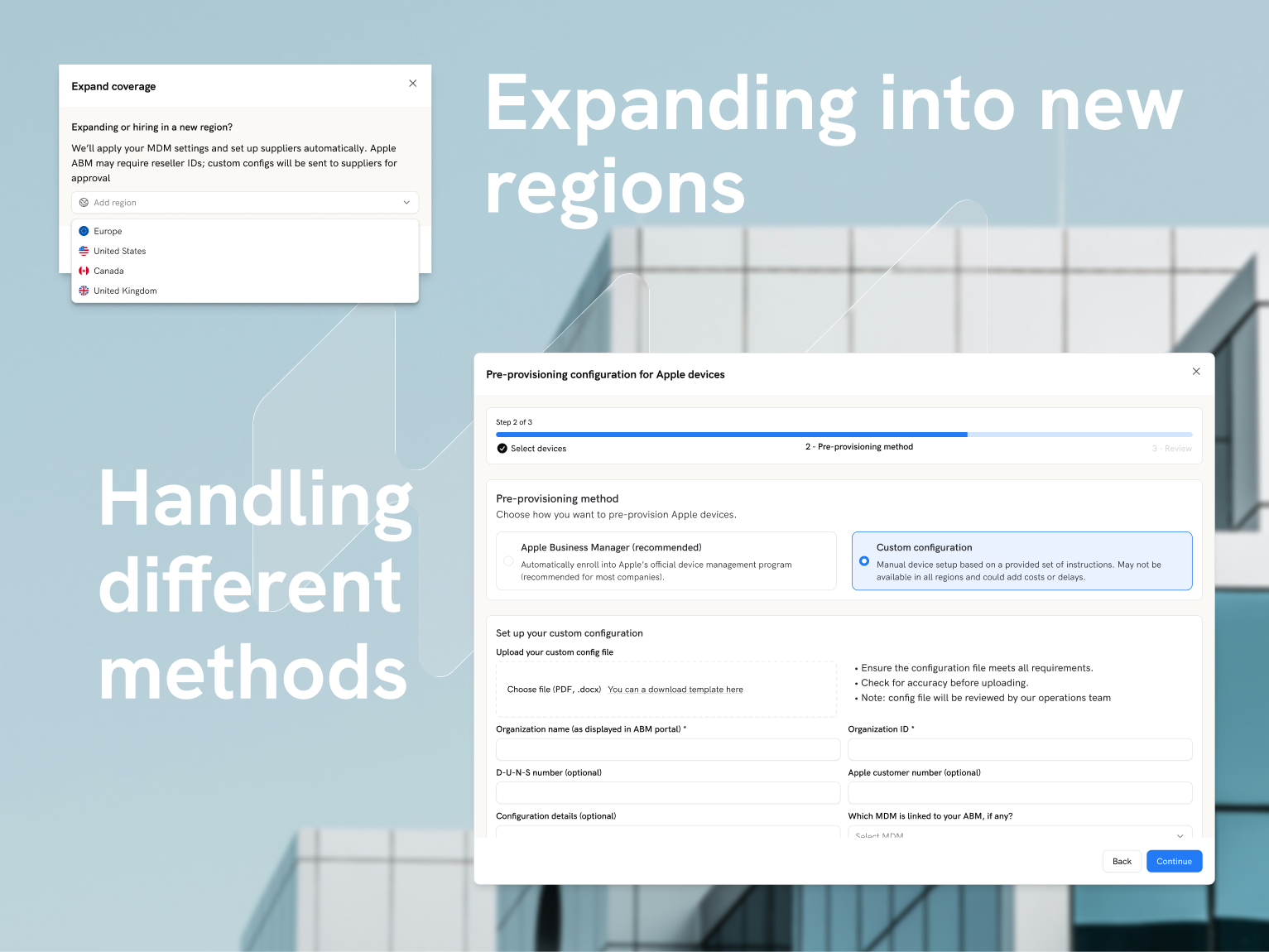
The tricky part was that there was no clean starting point. Different suppliers, different MDM providers, different configuration files for every client. On top of that, the solution had to plug into the Default Products layer we'd built, which unified supplier catalogues across regions. The provisioning logic needed to follow the product, regardless of which supplier was fulfilling the order or where.
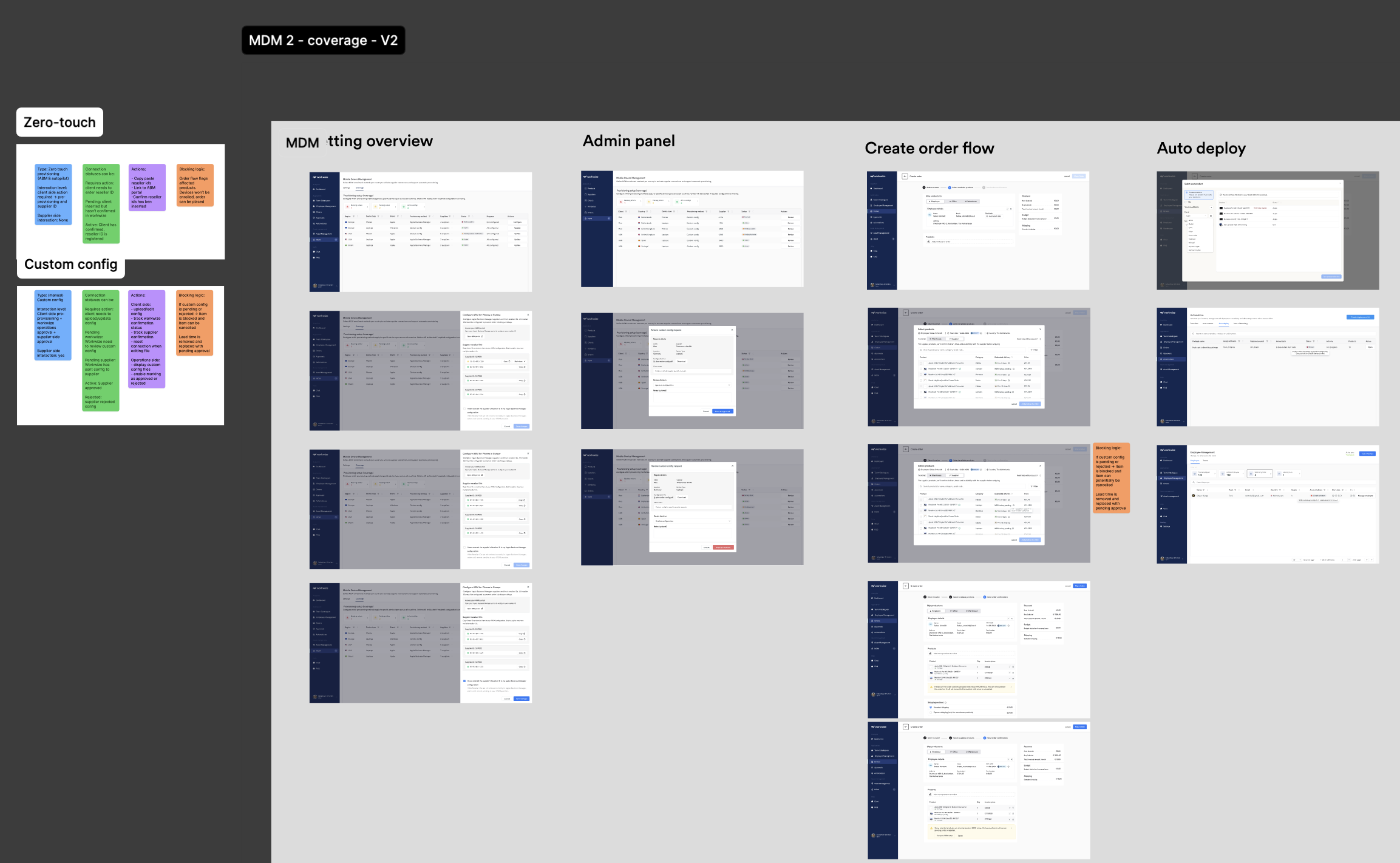
What Is Designed
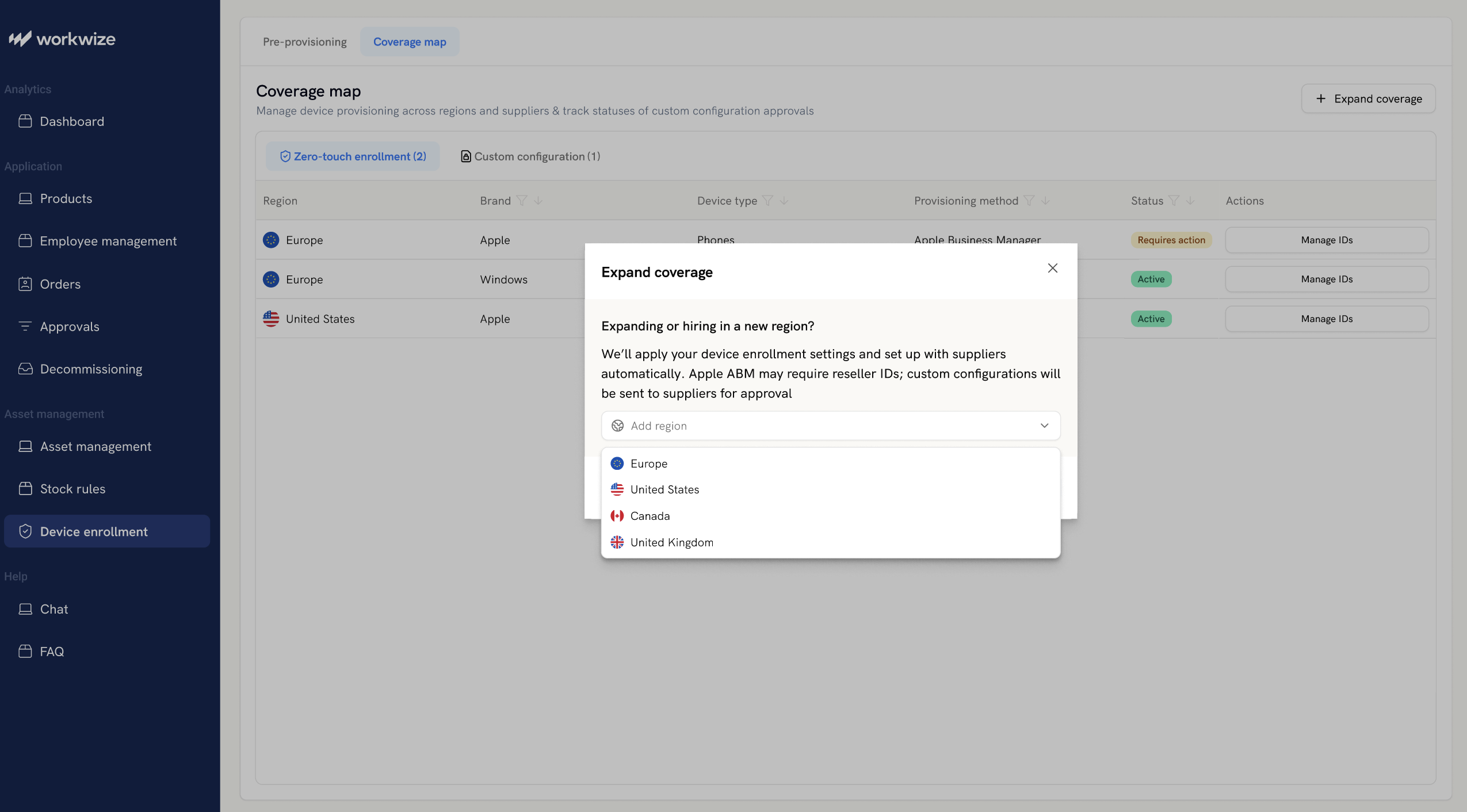
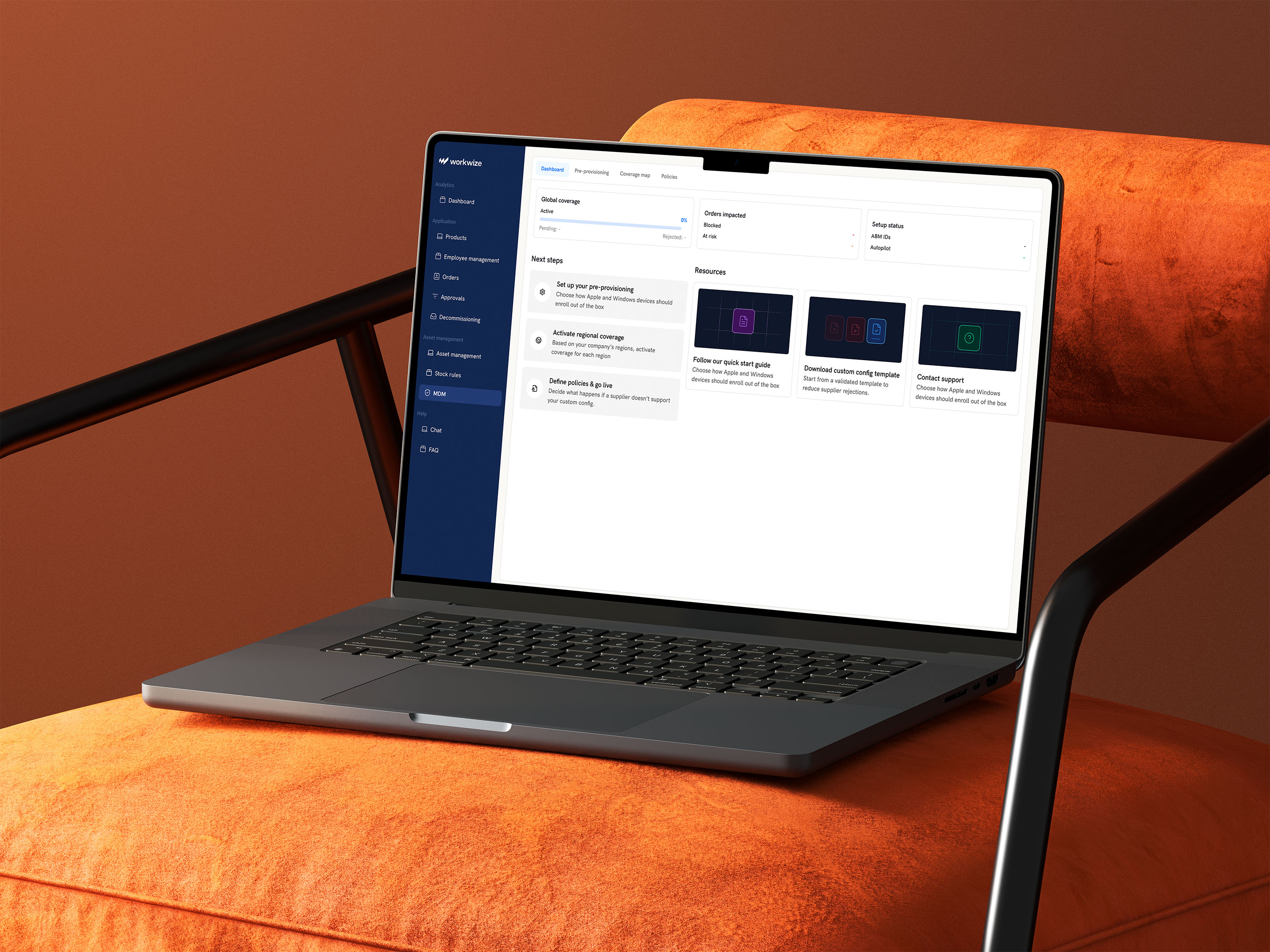
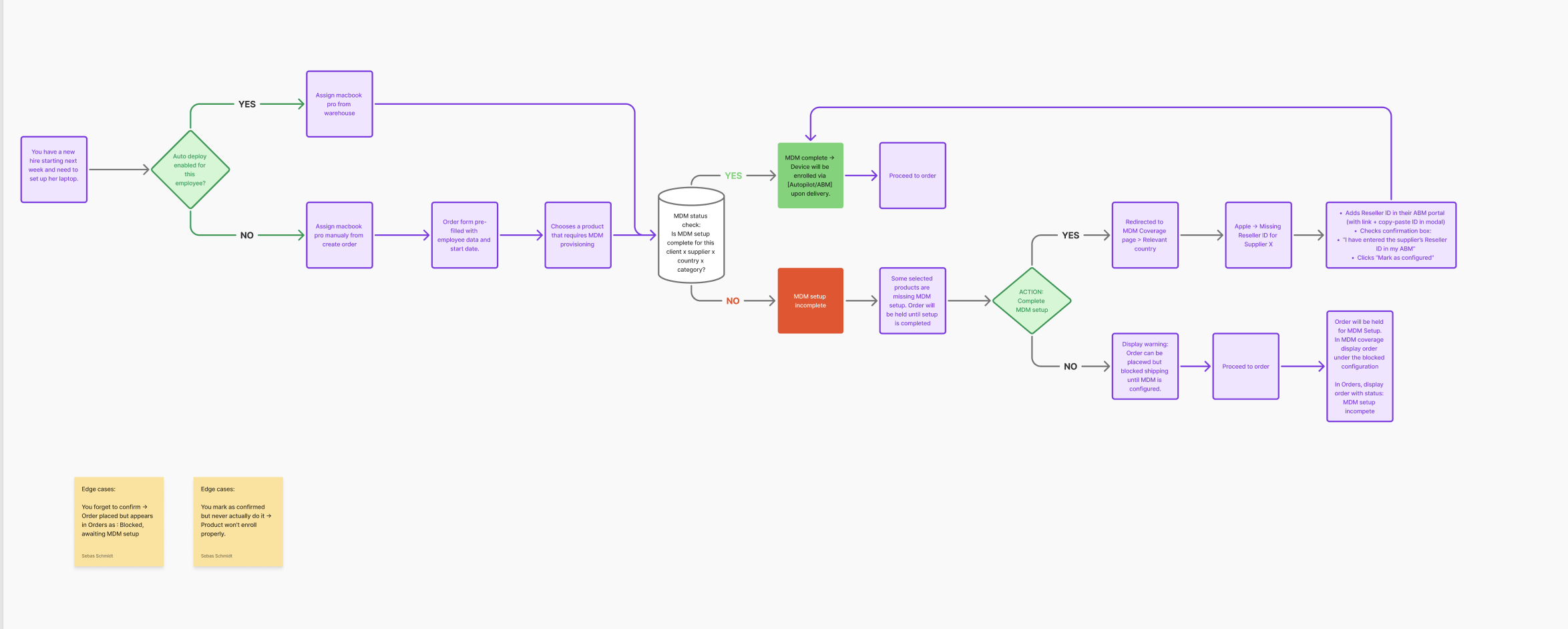
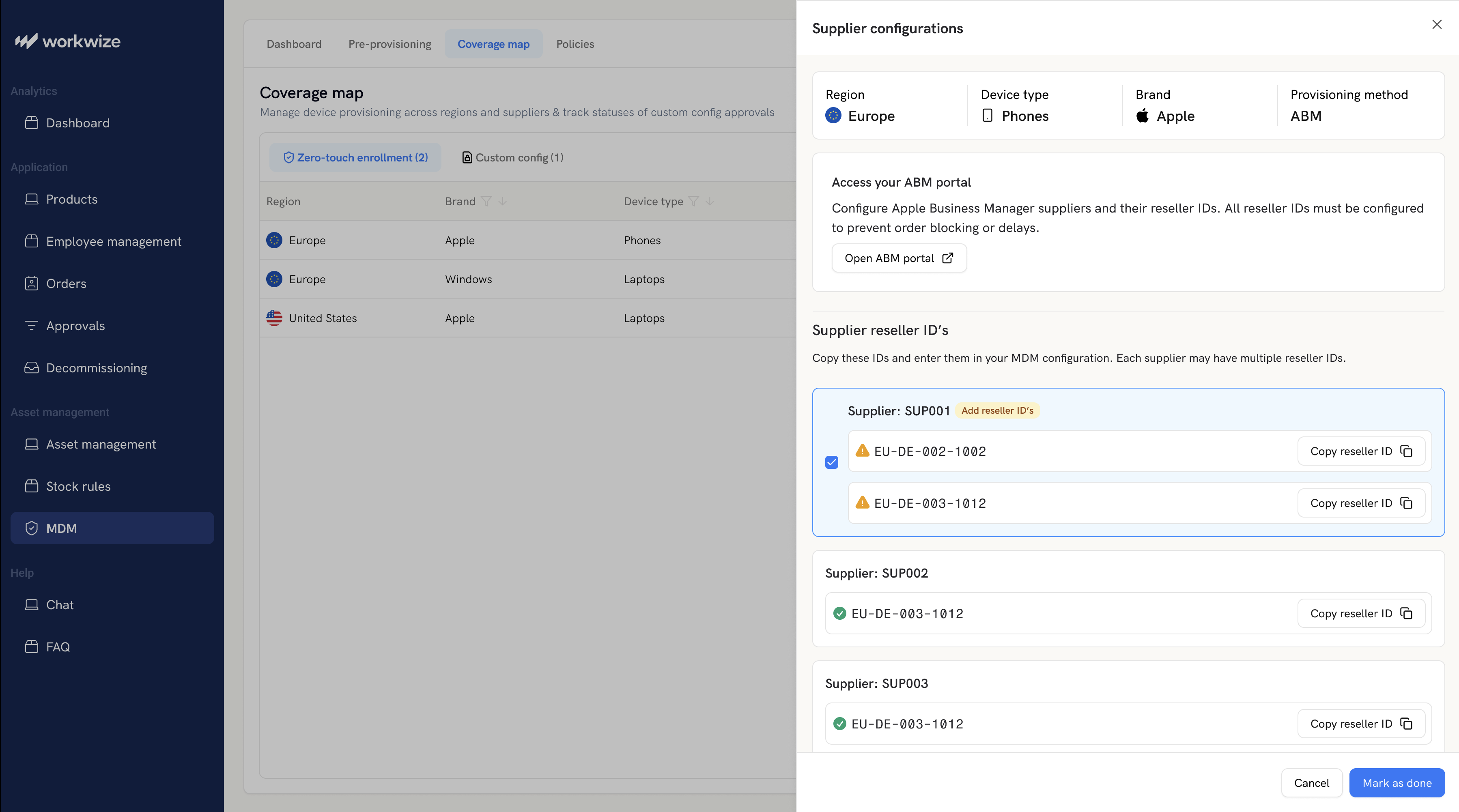
- The first piece was a pre-provisioning flow for IT managers. Instead of chasing confirmations over email, they got a clear process from device assignment through to software installation, with full visibility at every step. You could see exactly which devices were configured, which were still pending, and what was actually installed.
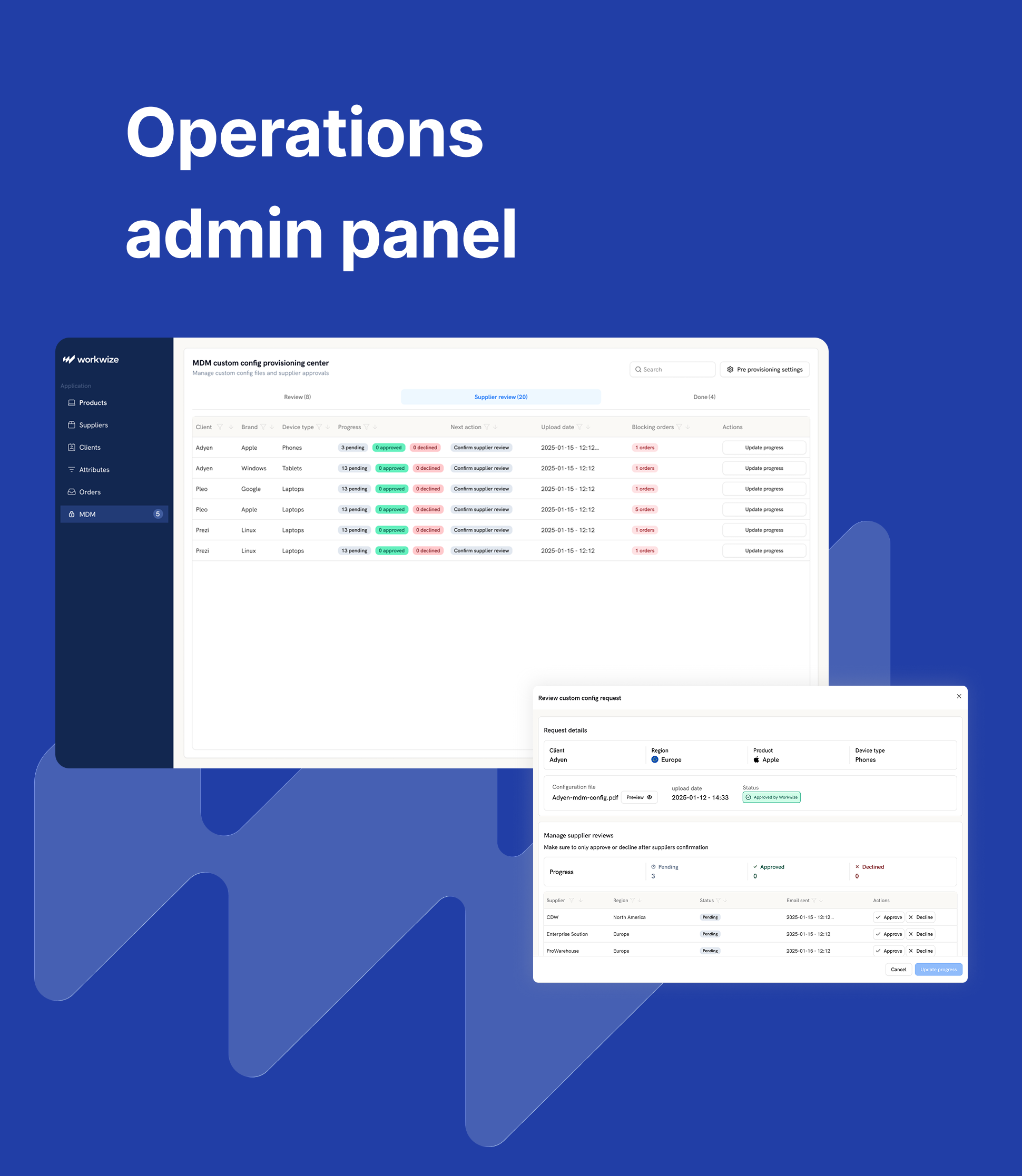
- The second piece was an internal admin panel for the ops team. Before any supplier config file could reach a client's device, it had to pass through a review. Ops could inspect files per supplier, approve or reject them, and send back clear feedback when something was off. No more guessing why a configuration failed.
The Impact
Onboarding went from one of the most painful parts of getting started with Workwize to something clients barely had to think about. The weeks of back-and-forth shrank down. The miscommunication mostly disappeared. But the thing I'm most proud of is what it unlocked for the platform: with provisioning actually working reliably, Workwize could deliver on its core promise at scale. Laptops shipped, arrived configured, and nobody had to chase anyone to make it happen.
Results
The MDM pre-provisioning feature became one of the most impactful releases Workwize delivered to its clients. What was previously one of the longest onboarding processes — weeks of manual coordination, missed communications, and zero visibility — was reduced to a structured, trackable flow. Back-and-forth between IT managers and client teams dropped dramatically, and the risk of miscommunication was largely eliminated. Clients could finally answer a question that had always been murky: which devices are ready, and what's installed on them.